


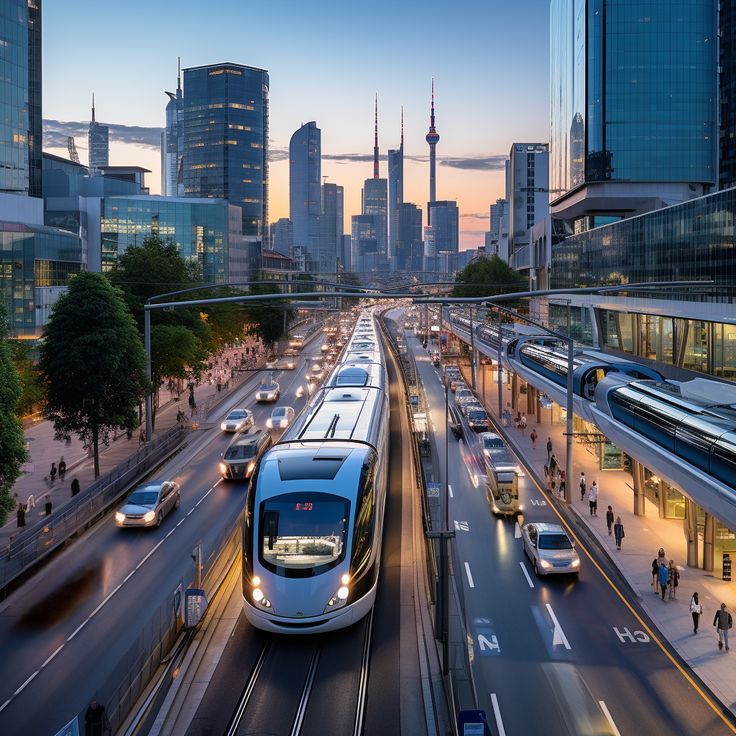
In an era of rising fuel prices, stricter emissions rules and growing congestion, choosing destinations with efficient mobility is no longer just convenient — it’s smart. Across the continent, some cities stand out as the best public transport cities in Europe, where owning or renting a car feels unnecessary.
From metro systems that run like clockwork to trams and buses that cover every neighbourhood, these cities make car-free travel not only possible, but genuinely enjoyable — for residents and visitors alike.
🇩🇪 1. Berlin: One of the Best Public Transport Cities in Europe
One of Europe’s most comprehensive transport networks
Berlin consistently ranks among the best public transport cities in Europe, thanks to its integrated and reliable system.
🚇 Transport network
- U-Bahn (metro)
- S-Bahn (urban rail)
- Trams and buses operating 24/7 on key routes
💳 Costs
- Single ticket: ~€3
- Day pass: ~€8.80
🚶 Why you don’t need a car
- Excellent coverage across all districts
- Cycling infrastructure throughout the city
- Attractions evenly distributed and well connected
🔗 Official transport authority:
https://www.bvg.de
🔗 Official tourism site:
https://www.visitberlin.de
Local insight:
Parking in Berlin is limited and expensive — public transport is often faster than driving.
🇦🇹 2. Vienna: A Benchmark Among the Best Public Transport Cities in Europe
Public Transport Costs in One of Europe’s Most Car-Free Cities
Vienna is frequently cited as one of Europe’s most liveable cities, and its transport system plays a major role.
🚇 Transport network
- Metro (U-Bahn)
- Trams covering historic and residential areas
- Dense bus network
💳 Costs
- Single ticket: ~€2.40
- Day pass: ~€8
- Annual pass for residents: €365 (€1 per day)
🚶 Why you don’t need a car
- City designed around public transport
- Most landmarks within walking distance of a station
- Low congestion and minimal delays
🔗 Official transport site:
https://www.wienerlinien.at
🔗 Tourism site:
https://www.wien.info
Comparison:
Vienna offers a more affordable and reliable alternative to cities like Munich or Zurich.
🇨🇭 3. Zurich: Premium Infrastructure in a Car-Free European City
How Zurich Became One of the Best Public Transport Cities in Europe
Zurich proves that premium infrastructure doesn’t always require a car, even in a high-income country.
🚇 Transport network
- Trams as the backbone of the city
- Trains integrated with regional transport
- Boats included in transport passes
💳 Costs
- Day pass (city zones): ~CHF 9
🚶 Why you don’t need a car
- Trams every few minutes
- Compact city centre
- Perfect connections to suburbs and airport
🔗 Official transport authority:
https://www.zvv.ch
🔗 Tourism site:
https://www.zuerich.com
Reality check:
While Zurich is expensive overall, not needing a car significantly reduces daily costs.
🇳🇱 4. Amsterdam: A European City Designed for Car-Free Transport
Designed for people, not cars
Amsterdam’s transport success lies in its combination of trams, cycling and walkability.
🚇 Transport network
- Trams covering all key districts
- Metro connecting outer areas
- Ferries across the IJ river (free)
💳 Costs
- Day pass: ~€9
- Multi-day passes available for tourists
🚶 Why you don’t need a car
- Driving is slow and restricted
- Limited parking and high fees
- Cycling often faster than any vehicle
🔗 Transport authority:
https://www.gvb.nl
🔗 Tourism site:
https://www.iamsterdam.com
Urban fact:
Amsterdam actively discourages car use — public transport is the smarter choice.
🇪🇸 5. Barcelona: Affordable Public Transport in Southern Europe
Affordable, intuitive and tourist-friendly
Barcelona offers one of Southern Europe’s most efficient transport systems, ideal for visitors.
🚇 Transport network
- Metro covering all major attractions
- Extensive bus and tram lines
- Unified ticketing system
💳 Costs
- Single ticket: ~€2.55
- Day pass: ~€8.40
🚶 Why you don’t need a car
- High walkability
- Beaches, old town and districts all connected
- Traffic restrictions in central areas
🔗 Transport authority:
https://www.tmb.cat
🔗 Tourism site:
https://www.barcelonaturisme.com
Budget advantage:
Public transport costs in Barcelona are significantly lower than in Madrid or Milan.
🌱 Why Car-Free Cities Matter in Europe
Choosing cities with strong public transport offers multiple benefits:
- 💶 Lower travel and living costs
- 🌍 Reduced environmental impact
- 🚶 Less stress and better mobility
- ⏱️ Faster travel during peak hours
For travellers, this means no rental fees, no fuel costs and no parking headaches. For residents, it translates into better quality of life.
🔎 Quick FAQ
Are these cities good for tourists?
Yes. All offer clear signage, tourist passes and multilingual support.
Is public transport safe at night?
Generally yes, especially in central areas and main lines.
Which city is the most affordable?
Barcelona and Berlin offer the best balance between price and coverage.
🧠 Final takeaway
These destinations prove that the best public transport cities in Europe are not just convenient — they actively improve how people experience urban life. Whether visiting for a weekend or staying long term, skipping the car often means saving money, time and energy.