



When I first read about the rise in attendance at free museums across Europe, I immediately linked it to inflation and rising travel costs. Still, as I followed this trend more closely, it became clear that something deeper was happening.
Free museums have taken on a strategic role in discussions about access to culture, informal education, and European identity. In a continent shaped by historical and social diversity, opening doors without charging admission has become a powerful cultural and political statement.
According to data published by organizations such as the International Council of Museums (ICOM), institutions with free entry tend to attract more diverse audiences, including local residents, students, and visitors with limited budgets
🔗 https://icom.museum/en/
In my view, this reflects a quiet but significant shift. Culture is no longer treated as a privilege. It is increasingly understood as a collective right.
Free museums as cultural and social policy
Expanded access during economic pressure
Although Europe remains one of the world’s leading tourist destinations, the cost of living has increased significantly in recent years. Transportation, accommodation, and food have become more expensive in nearly every major city.
In this context, free museums offer a real solution for those who want cultural experiences without straining their finances. Both tourists and residents benefit from this model.
According to the European Commission – Culture and Creativity, free access to cultural spaces strengthens social cohesion and encourages civic participation
🔗 https://culture.ec.europa.eu/
During my visits, I noticed that these museums are not seen as “second options.” Instead, they often sit at the heart of urban cultural life.
Informal education beyond the classroom
Another clear impact appears in education. Free museums function as extensions of the school system, offering educational exhibitions, interactive resources, and youth programs.
At the Science Museum in London, I watched entire school groups using the space as a hands-on learning environment. Children explored scientific concepts through direct experience, something that is difficult to replicate in traditional classrooms.
The museum itself emphasizes this educational mission
🔗 https://www.sciencemuseum.org.uk/
According to European educational research, informal cultural experiences increase engagement and improve knowledge retention.
Must-see free museums in Europe
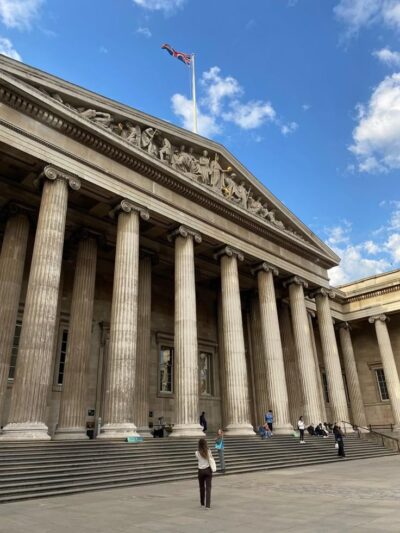
1. British Museum — London
Few places better represent the idea of free museums than the British Museum. Free admission provides access to one of the largest historical collections in the world.
Walking through its galleries feels like traveling across civilizations. Ancient Egypt, Mesopotamia, Greece, and Rome all coexist under one roof.
Despite ongoing debates about the origins of certain artifacts, the museum remains a global benchmark for preservation and research
🔗 https://www.britishmuseum.org/
2. National Gallery — London
Located in Trafalgar Square, the National Gallery offers free access to works by Van Gogh, Monet, Turner, and Leonardo da Vinci.
In practical terms, this means anyone can encounter some of the most influential paintings in Western art history without paying an entrance fee.
According to official figures, the gallery welcomes millions of visitors each year, reinforcing its role as one of the world’s most accessible cultural institutions
🔗 https://www.nationalgallery.org.uk/
3. Musée d’Art Moderne de la Ville de Paris
While the Louvre attracts massive crowds, this free museum delivers a quieter and more contemporary experience.
Its permanent collection includes works by Picasso, Matisse, and Delaunay. Additionally, its location near the Seine strengthens the connection between art, the city, and everyday life.
The institution highlights its commitment to open cultural access on its official platform
🔗 https://www.parismusees.paris.fr/
In my experience, it remains one of Paris’s most underrated museums.
4. Museo Reina Sofía — Madrid (free hours)
Although not entirely free, the Reina Sofía offers free entry during specific hours. Planning ahead makes all the difference.
Seeing Picasso’s Guernica without paying admission is emotionally powerful. The painting remains strikingly relevant, especially in a European context shaped by reflection on conflict and historical memory.
Official information about free entry hours is available on the museum’s website
🔗 https://www.museoreinasofia.es/
5. Neues Museum — Berlin (selected free days)
Part of Berlin’s Museum Island, the Neues Museum combines archaeology and German history in a carefully restored building.
While normally ticketed, the museum offers free admission on selected days supported by Berlin’s cultural policies
🔗 https://www.smb.museum/en/museums-institutions/neues-museum/
The presence of the famous bust of Nefertiti continues to draw visitors from around the world.
Urban and economic impacts of free museums
It may seem counterintuitive, but free museums generate indirect economic returns. Visitors spend money on cafés, bookstores, public transportation, and local shops.
According to analysis by the European Travel Commission, culture is one of the main drivers of sustainable urban tourism
🔗 https://etc-corporate.org/
In practice, neighborhoods gain vitality and cities become attractive even outside peak travel seasons.
The challenges behind free admission
Funding and long-term sustainability
Despite the benefits, maintaining free museums requires continuous investment. Conservation, security, and exhibition renewal involve high costs.
Many institutions depend on public funding, private donations, and institutional partnerships. Financial sustainability remains a central challenge.
Overcrowding and preservation
Another sensitive issue is overcrowding. During peak periods, some museums experience physical wear and logistical strain.
Both challenges require long-term cultural planning and effective visitor management.
What lies ahead for free museums in Europe
From my perspective, free museums are likely to expand further, especially with support from digital platforms and hybrid exhibitions.
What comes next could redefine the relationship between museums and society. These spaces are becoming active centers for debate, inclusion, and lifelong learning.
Final reflection
Throughout these visits, it became clear that free museums are far more than tourist attractions. They act as mirrors of European history and bridges between past and present.
Free access does not diminish cultural value. On the contrary, it multiplies its reach and meaning.
FAQ — Frequently asked questions about free museums in Europe
Are free museums open every day?
Not always. Some offer permanent free entry, while others provide free access only on specific days or hours.
Are free museums lower in quality?
No. Many of the world’s most important museums offer free admission.
Is advance booking required?
In some cases, yes, especially during high-demand periods.
Do free museums receive government support?
Yes. Most rely on public funding and cultural foundations.