




Introduction: The magic of Christmas on four wheels and countless destinations
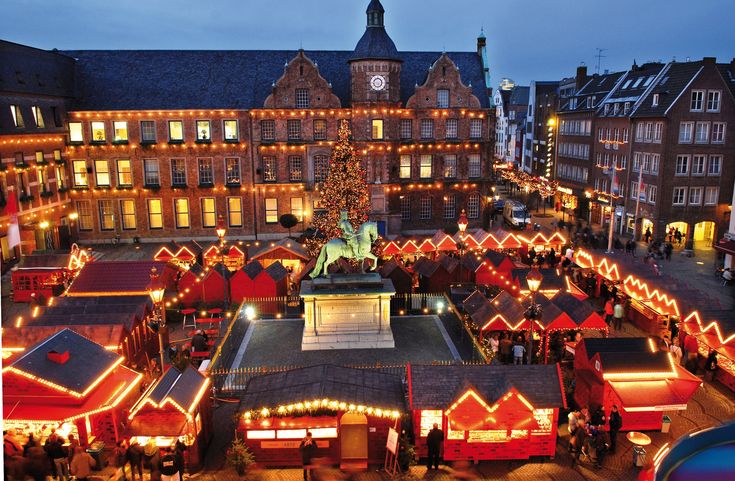
Traveling across Europe during Christmas feels like opening a life-sized advent calendar: each day reveals a different scene, with unique scents, colors, and sounds. I’ve always loved this season, but it wasn’t until I toured some of the continent’s most iconic Christmas markets that I understood why so many people cross borders just to experience it.
Each market has its own charm. Some are huge, taking over entire squares or even neighborhoods; others are smaller, almost hidden, but with a warmth that cuts through even the coldest days. What they all share is an irresistible mix of twinkling lights, traditional food, warm drinks, and that special winter atmosphere only Europe can deliver.
1. Vienna Christmas Market – Imperial elegance with the scent of mulled wine
If there’s one city that takes Christmas seriously, it’s Vienna. The Rathausplatz (City Hall Square) transforms into a true spectacle. There are over 150 stalls, each selling something you probably don’t need but will absolutely want — from hand-painted glass ornaments to miniature nativity scenes.
💡 Average price: A cup of Glühwein (mulled wine) costs around €5, plus €3-4 as a deposit for the mug.
🍽 Typical food: Viennese sausages, apple strudels, roasted chestnuts.
🎯 Pro tip: Arrive in late afternoon to watch the lights change from day to night — it’s magical.
2. Strasbourg – The Capital of Christmas
Strasbourg calls itself the “Capital of Noël” and, honestly, it’s no exaggeration. The market dates back to 1570 and takes over the entire historic center. The decorations are jaw-dropping, with entire building facades draped in lights and garlands.
💡 Average price: More affordable than Vienna; hot chocolate for €3 and raclette plates for €6-8.
🍽 Typical food: Bretzels, raclette, pain d’épices (spiced gingerbread).
🎯 Atmosphere: A blend of tradition and joy, with choirs and live music at various corners.
3. Nuremberg – Germany’s most famous market
The Christkindlesmarkt is practically the symbol of German Christmas. Tradition runs deep here: stalls sell Lebkuchen (gingerbread), wooden toys, and handcrafted ornaments. The official opening, with the arrival of the “Christkind” (Christ Child), draws massive crowds.
💡 Average price: Bratwurst in bread for €4, mulled wine mug for €5.
🍽 Typical food: Nuremberg sausages (smaller and more seasoned), Lebkuchen.
🎯 Fun fact: Don’t expect modern decorations — the focus here is on preserving tradition.
4. Prague – A fairytale setting
With its illuminated Old Town and a huge Christmas tree in the main square, Prague feels straight out of a movie set. The market is smaller than Vienna’s or Strasbourg’s, but its romantic atmosphere more than makes up for it.
💡 Average price: A Trdelník (sweet dough rolled and grilled with sugar and cinnamon) for €3-4.
🍽 Typical food: Trdelník, grilled sausages, bread bowl soups.
🎯 Pro tip: Pair your visit with a nighttime stroll to Prague Castle.
5. Bruges – Christmas in postcard form
Bruges is charming all year round, but at Christmas it feels like every street was made for a holiday card cover. The main market is in the Grote Markt, with an ice-skating rink and views of the historic buildings.
💡 Average price: Artisan hot chocolate for €4, waffles for €5.
🍽 Typical food: Belgian waffles, hot chocolate, cheese croquettes.
🎯 Atmosphere: Small, cozy, and incredibly photogenic.
6. Cologne – Multiple markets in one city
Cologne doesn’t just have one market — it has several scattered across the city. The most famous is the one by the Cathedral, with the stunning Kölner Dom as a backdrop. Each market has a different theme, making the visit even more exciting.
💡 Average price: Pea soup for €5, mulled wine for €4-5.
🍽 Typical food: Reibekuchen (potato pancakes), bratwurst.
🎯 Pro tip: If you have time, explore smaller markets like the “Angel’s Market” and the “Harbor Market.”
7. Tallinn – The medieval charm of the North
Tallinn is easily one of the most photogenic markets I’ve ever seen. Right in the center of the Old Town’s main square, stalls are surrounded by medieval buildings and a massive Christmas tree.
💡 Average price: Cheaper than the European average — soups and cakes for €3-4.
🍽 Typical food: Meat soup, sweet cardamom bread.
🎯 Vibe: Much colder than most of Europe, but also more authentic and less crowded.
8. Copenhagen – Christmas at Tivoli Gardens
Tivoli Gardens transforms into a Christmas wonderland, with lights, music, shops, and rides. It’s a bit different from traditional markets, but absolutely worth the visit.
💡 Average price: Entry plus food can be pricier — around €20-25 total.
🍽 Typical food: Roast pork sandwiches, æbleskiver (sweet pancake balls).
🎯 Unique factor: The mix of amusement park and Christmas market is one of a kind.
Price & atmosphere comparison
(text description of a chart)
Picture a bar chart showing that Tallinn and Prague are the most budget-friendly, while Vienna and Copenhagen are on the pricier side. On the atmosphere scale, Strasbourg and Bruges lead with flawless charm and decorations, while Cologne and Nuremberg score high for tradition.
Average costs for visiting a European Christmas market
(text description of a table)
| City | Avg. food + drink cost | Weather | Style | Crowds |
|---|---|---|---|---|
| Vienna | €12-15 | Cold-moderate | Elegant | High |
| Strasbourg | €8-12 | Cold | Charming | High |
| Nuremberg | €9-12 | Cold | Traditional | High |
| Prague | €6-9 | Cold | Romantic | Medium |
| Bruges | €8-10 | Cold | Cozy | Medium |
| Cologne | €8-12 | Cold | Varied | High |
| Tallinn | €6-8 | Very cold | Medieval | Low |
| Copenhagen | €20-25 | Cold | Themed | Medium |
Conclusion: Is it worth it?
Absolutely. Each market has its own personality and highlights, and the best part is how much they reflect local culture. My advice is simple: don’t choose only based on size or fame — sometimes the smaller, less touristy ones offer the most genuine experiences.
FAQ – Frequently Asked Questions
1. Should I book accommodation in advance for Christmas markets?
Yes, especially in the most popular cities like Vienna and Strasbourg.
2. Can I visit multiple markets on one trip?
Yes, many are relatively close and can be combined in a single itinerary.
3. What should I bring to make the most of it?
Warm clothes, comfortable shoes, and some cash for small purchases.
4. Is it worth buying ornaments at the markets?
Yes, the craftsmanship is unique — but be prepared to pay a little more.
If you’ve visited any of these markets or have a favorite I didn’t mention, drop it in the comments! And if you found this guide helpful, like, save, and share it with someone who loves the Christmas spirit.