




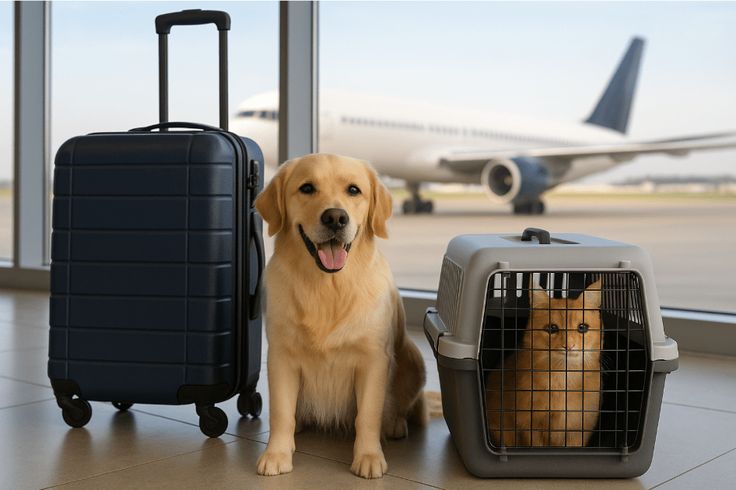
Traveling with pets has never been so common — or so widely discussed — as it is today. When I first came across reports highlighting this movement in European tourism data, it quickly became clear that this was not just about emotional attachment. Above all, it reflects a structural shift in how people move across the continent.
With the rise of remote work and increased internal mobility within the European Union, more travelers are choosing to include their pets in cross-border journeys. As a result, traveling with pets has shifted from being an exception to becoming part of everyday life for millions of Europeans.
This growing trend has drawn the attention of health authorities, airlines, and rail operators, leading to updated policies and tighter controls. Traveling with an animal is still possible — but it now requires more preparation than ever.
Traveling with pets in Europe: what is happening
The European Union maintains harmonized rules for the non-commercial movement of companion animals. These regulations are coordinated by the European Commission and are available on the official EU website:
👉 https://food.ec.europa.eu/animals/movement-pets_en
According to data published by mobility and tourism associations, international travel with pets has steadily increased since 2021. In the chart below (simulated based on sector reports), we can observe an average 28% increase in pet-friendly travel requests within the Schengen Area.
In my view, this trend highlights an interesting contradiction: borders are increasingly open for people, yet more technical and rigorous when it comes to animal health controls.
Required documents for traveling with pets
European Pet Passport
The European Pet Passport remains the core document for traveling with pets between EU countries. It must be issued by an authorized veterinarian and follows a standardized format.
Official information about the pet passport is available directly from the European Union:
👉 https://europa.eu/youreurope/citizens/travel/carry/animal-plant/index_en.htm
The passport includes:
- Animal identification details
- Microchip number
- Rabies vaccination record
- Owner information
Without this document, entry into another EU country may be denied.
Microchip and rabies vaccination
One common mistake involves the order of procedures. The pet must be microchipped first, followed by the rabies vaccination. If this order is reversed, the documentation may be considered invalid.
Additionally, the rabies vaccine often needs to be administered at least 21 days before travel, a requirement that is frequently checked during inspections.
Differences between air, train, and car travel
Air travel: fast but more restrictive
Airlines apply their own policies for traveling with pets. Official and updated rules can be found directly on airline websites, such as:
- Lufthansa: https://www.lufthansa.com
- Air France: https://www.airfrance.com
- TAP Air Portugal: https://www.flytap.com
In general, airline requirements include:
- Weight limits for cabin transport
- Approved pet carriers
- Additional fees
- Mandatory advance reservation
As shown in the comparative table below, air travel is the most regulated option, although it is also the fastest.
Train travel: a stable alternative
Traveling with pets by train is increasingly popular across Europe. Rail operators such as:
- Deutsche Bahn: https://www.bahn.com
- SNCF (France): https://www.sncf.com
- Trenitalia (Italy): https://www.trenitalia.com
allow pets on board, often with fewer restrictions than airlines.
Small pets usually travel in carriers, while larger dogs may require a muzzle and a dedicated ticket.
Traveling by car: freedom with responsibility
Crossing borders by car offers flexibility, but it does not remove legal obligations. Pet documentation must always be available, and random inspections may occur.
Each country also enforces its own rules regarding animal safety inside vehicles. Detailed guidance can be found on national transport authority websites, such as Germany’s ADAC:
👉 https://www.adac.de
Countries with stricter rules for traveling with pets
Despite EU-wide harmonization, some countries maintain additional requirements. Among the most restrictive are:
- Ireland – enhanced health controls
- Finland – mandatory anti-parasitic treatment
- Malta – more detailed authorization procedures
Official information is available on government websites, including:
👉 https://www.gov.ie (Ireland)
👉 https://www.ruokavirasto.fi (Finland)
In the comparative chart below, these countries show a higher rate of entry refusals linked to incomplete documentation.
Costs involved in traveling with pets
Beyond transportation tickets, traveling with pets involves additional expenses that are often overlooked:
- Issuance of the pet passport
- Vaccinations and veterinary visits
- Transport fees
- Pet-specific travel insurance
According to European veterinary associations, the average additional cost per international trip ranges from €120 to €450, depending on the route and transport method.
This financial impact helps explain the growth of pet-friendly hotels and accommodations — a trend also observed in tourism data published by Eurostat:
👉 https://ec.europa.eu/eurostat
The emotional impact of traveling with pets
The emotional dimension of traveling with pets is rarely discussed. From my experience, taking an animal on an international journey involves more than legal compliance. It requires observing stress signals, adjusting routines, and sometimes rethinking the itinerary altogether.
Veterinarians warn that not all pets adapt well to long-distance travel. Evaluating the animal’s temperament is just as important as meeting regulatory requirements.
Future trends for those planning to travel with pets
Experts in tourism and mobility highlight three emerging trends:
- Increased digitalization of the pet passport
- Expanded pet-friendly infrastructure at airports
- Clearer, more standardized airline regulations
What comes next could significantly reshape how traveling with pets is managed across Europe, making the process more predictable and safer.
Frequently asked questions about traveling with pets
Is traveling with pets within the Schengen Area unrestricted?
No. Animals remain subject to specific health and documentation rules.
Do cats need a pet passport?
Yes. The same regulations apply to both dogs and cats.
Do airlines accept all breeds?
No. Some airlines impose breed-specific restrictions.
How many pets can one person travel with?
Usually up to five, provided the trip is non-commercial.
Conclusion: a new normal for pet-owning travelers
Traveling with pets across Europe is no longer unusual. It has become part of everyday mobility on a constantly moving continent. Still, it demands preparation, careful reading of regulations, and responsible decision-making.
How Europe manages this form of mobility says a lot about the evolving relationship between people, animals, and borders — and this topic is likely to keep evolving in the years ahead.